
Ordinary Germans
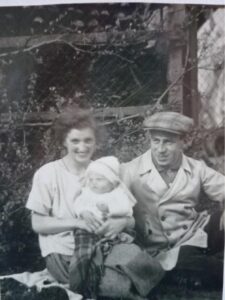
Ernie Hunter (previously Hunsdorfer), tells the story of his father, Anton Hundsdorfer, sister Sonja and his non-Jewish German family.
Anton was born in 1902, and Sonja, in 1927
Ernie’s family were victims of Nazi Persecution because they were communists and political opponents of Hitler. The story tells how non - Jewish Germans who opposed Hitler also suffered terror, imprisonment, interrogation, torture, forced labour and murder.
Anton, born in Bavaria, Germany, in 1902, was brought up in his stepfather’s home in Bohdasice in the German-speaking part of what became Czechoslovakia. Anton did not get on with his stepfather and, in 1918, ran away.
Anton arrived in Munich after Germany lost World War 1 at the time when a short-lived Communist Bavarian Republic was being formed. The ideals of communism and democracy , where everybody had a voice and equal rights , made a lifelong impression on Anton. Anton felt the crushing of the Republic by right wing forces meant democracy was under threat. He became an active member of the KPD [Kommunistische Partei Deutschland].
Anton married Klara Holy, and they had a daughter, Sonja. Following Klara’s tragic death in 1928, Anton and Sonja lived with Klara’s parents. Anton delivered anti-Nazi leaflets throughout Bavaria putting him on a Nazi enemy list.
When Hitler took control of Germany in 1933, Anton, as a political opponent, had to flee for his life, leaving his daughter behind. He reached the UK as a refugee in 1939. Sonja was brought up, in Germany, as an orphan. Meanwhile her uncles were subject to imprisonment, torture and murder in Dachau concentration camp. Miraculously, within days of the end of World War 2 in Europe, Anton managed to make contact with his daughter.
A lesson for today drawn from the story is the importance of free speech and democracy in preventing persecutions/genocides.
This presentation is suitable for Year 9 upwards and adults. It is suitable for Y7 with preparation.
"The presentation captured the interest of all the learners from the beginning. The Welsh connection added to the interest.” Head of History, Ysgol Y Creuddyn